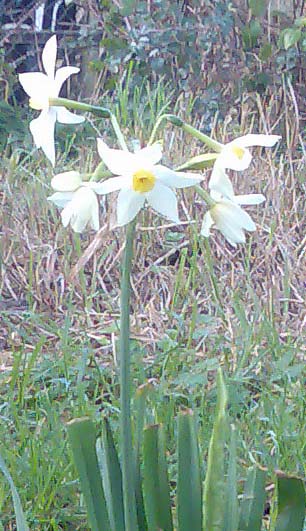
The winter solstice and a lone spring flower stands sentry at the edge of the old orchard.
Paperwhites are narcissus by name and by nature. This one has been tricked by two weeks of mild weather (daytime 20, night-time 10) into arriving five weeks too early for the spring carnival. It doesn’t realise that it’s all down-hill from here.
June is the start of the year for the Southern Hemisphere gardener. As the growing season runs down and we eat the last of the autumn crops, the year comes to a natural full-stop. Even here in the Winterless North. Sure, we mightn’t be under snow and we might be down to tee-shirts on sunny afternoons, but nature is telling us that now, the shortest day of the year, is time to stop and take stock.
Ahead is the short sharp winter that sees us pulling jerseys out of storage and throwing frost protection over our most tender plants, but for now we’re thinking about the year ahead.
A few weeks back I sat down and made a list of all the things that we can grow here to eat in winter. It is 50 items long. And while I’m pushing it to claim even 10 per cent of that list is coming out of my garden this year, it made me realise how fortunate I am to garden in an area with a 12-month growing season. The American and English books I’ve spent the last two months studying as I draw up my garden plan are based on six-month seasons at the most. Even my New Zealand-based sister is far more limited in the winter crops she can grow in her North Canterbury garden.
The down side of our year-round bounty is that we never really stop gardening. Our seasons overlap. This week I’ve been feeding winter crops like broccoli and cabbages with vermicast and planting out silverbeet (Swiss chard) seedlings, while pricking out lettuces and sowing next summer’s onions. The broad (fava) beans in trays in the greenhouse are up, as are the peas sown into the kumara bed two weeks ago.
But not this weekend. Gardening activities have been limited to ordering kiwifruit vines to plant on the chook run (Hayward and Arguta females and a Chieftain male) and sitting in the sun, surrounded by books, seed packets and my garden diary, appreciating the food we’ve had over the past year and anticipating the crops to come.
Next week we start planting the garlic, and in a month I will put in the first seed potatoes, confident that the frosts will be over by the time they push their shoots up into the August sunshine. Then it’s into the hard work of preparing the beds for spring planting. Between now and then I have to work out how many plants its takes to keep a family of three in potatoes, greens and other crops, how much ground they will need and get the seedlings germinated and growing.
From where I sit at the moment it’s all a bit daunting. It’s one thing to grow half-a-dozen lettuces and a few stalks of silverbeet; it’s another to anticipate and provide your family’s food for the year. So for now I’m patting myself on the back for the successes of the past year – my first crop of potatoes, my first crop of kumara, the best broccoli and cabbages I’ve ever tasted, and some summer fruit put away in the pantry in the form of jams, chutneys and dried fruits.
And as I look past the tangelo trees and their ripening bounty into the old orchard I can’t help but raise a mental toast to the paperwhite whose sense of self is so strong that it doesn’t care whether it’s ahead of its time or not.
It takes courage to go your own way, and I hope I have enough of it.